Pelion is often described as one of the most beautiful regions in Greece. But beyond its forests, stone villages, and sea views lies something even more fascinating — a deep mythological past.
Have you ever wondered why so many ancient Greek myths are connected to this mountain? Why heroes were trained here, why gods gathered on its slopes, or why the Centaurs were said to roam its forests?
In Greek mythology, Pelion was far more than a mountain. It was a sacred landscape — a place where the human and the divine met. Understanding Pelion Greek mythology doesn’t just enrich your knowledge of the region; it changes the way you see it. The trails feel older. The forests feel wiser. The silence feels meaningful.
Let’s explore the stories that turned this mountain into one of the most legendary of the ancient world — and discover Pelion not only as a destination, but as a place shaped by myth, nature, and timeless identity.
The meaning of Pelion: What does the name really signify?
The origin of the name “Pelion” has been interpreted in different ways over time, but the most widely accepted version connects it directly to Greek mythology.
According to ancient tradition, the mountain was named after Peleus, the mythological king of the Myrmidons and father of Achilles. Some scholars have also explored linguistic roots that associate the name with descriptive elements of the landscape. However, in cultural memory and mythological narrative, Pelion is inseparable from Peleus and the events surrounding him.
More than a simple toponym, the name reflects a mountain deeply embedded in myth — a place where dynasties began, destinies were shaped, and stories that would define Greek mythology were set into motion.
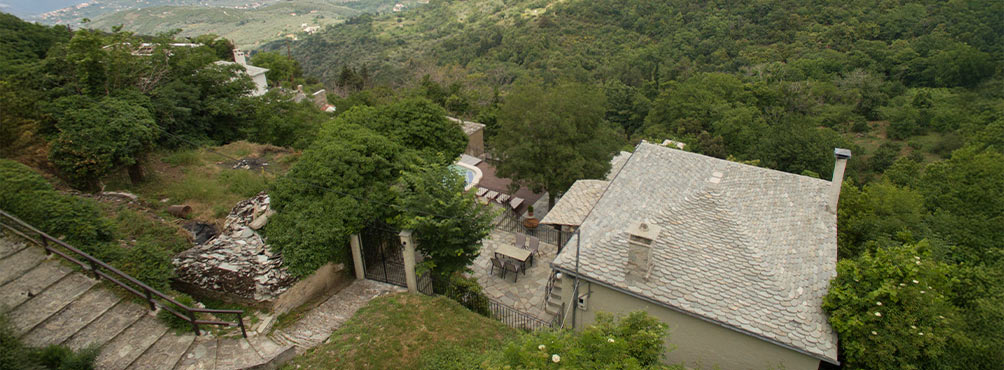
Also read: How to get to Pelion: All means of transport, routes, and tips
Pelion in Greek mythology
To understand Pelion fully, you have to see it not only as a geographical landmark but as a mythological stage.
The land of the Centaurs and the wisdom of Chiron
In ancient lore, Pelion was the homeland of the Centaurs — half-human, half-horse beings known for their wild and untamed nature. They symbolized the duality of human instincts: civilization and chaos coexisting in one body.
Yet among them stood one exceptional figure: Chiron.
Unlike the other Centaurs, Chiron was wise, gentle, and deeply knowledgeable in medicine, music, hunting, and philosophy. His cave on Mount Pelion became a legendary school for heroes. He mentored some of the greatest figures in Greek mythology, including Achilles, Jason, and Asclepius.
Pelion, therefore, was not just a wilderness. It was a place of learning. A mountain of transformation. Under Chiron’s guidance, raw strength was refined into wisdom.
And when you walk through Pelion’s forests today, with the scent of herbs in the air and birds echoing through the trees, it’s not difficult to imagine why this setting was chosen as the birthplace of healing and education in myth.
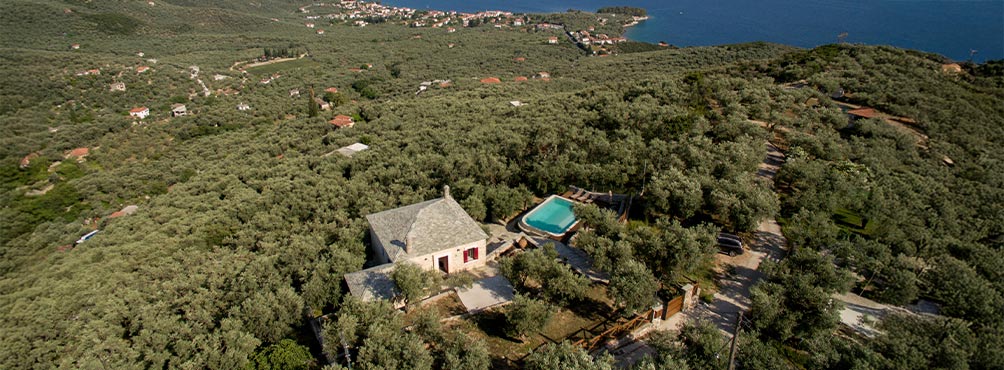
The wedding of Peleus and Thetis
One of the most important events in Greek mythology took place on Mount Pelion: the wedding of Peleus, a mortal king, and Thetis, a sea nymph.
This was no ordinary celebration. The gods themselves attended. It was here that the famous golden apple — inscribed with “To the fairest” — was thrown by Eris, the goddess of discord, after she was not invited.
That single act of jealousy set in motion the chain of events that ultimately led to the Trojan War.
A mountain wedding in Pelion triggered one of the greatest epics in literature. In mythological symbolism, Pelion becomes the place where fate quietly begins to unfold. Where divine decisions ripple into human history.
You may be interested in: 9+1 beaches in Pelion that you can't miss!
The birth and education of Achilles on Mount Pelion
From that same wedding came Achilles, one of the central heroes of the Trojan War.
After his birth, Achilles was brought to Mount Pelion to be raised by Chiron. There, away from courtly politics and royal expectations, he learned discipline, strategy, music, and the art of healing. He was trained in the wild, shaped by nature.
It is no coincidence that Greek mythology chose Pelion as the place where the greatest warrior was educated. The mountain represents balance — strength and sensitivity, instinct and intellect. And perhaps this myth tells us something timeless: greatness is not forged in luxury, but in connection with nature and wisdom.
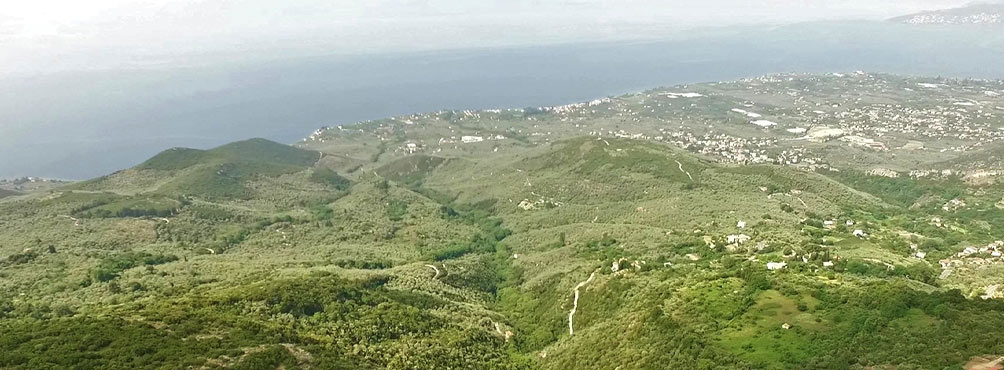
“Pelion upon Ossa”: The Giants’ attempt to reach Olympus
Another well-known myth gave rise to the expression “Pelion upon Ossa.”
According to legend, the Giants attempted to overthrow the Olympian gods by stacking Mount Pelion on top of Mount Ossa to reach Olympus. It was a bold and rebellious act — a literal attempt to climb into the realm of the divine.
The phrase later became a metaphor in ancient Greek literature for piling one problem upon another. But originally, it symbolized ambition beyond measure. Once again, Pelion stands at the center of cosmic drama — not just a physical mountain, but a symbol of power, defiance, and the eternal human desire to reach higher.
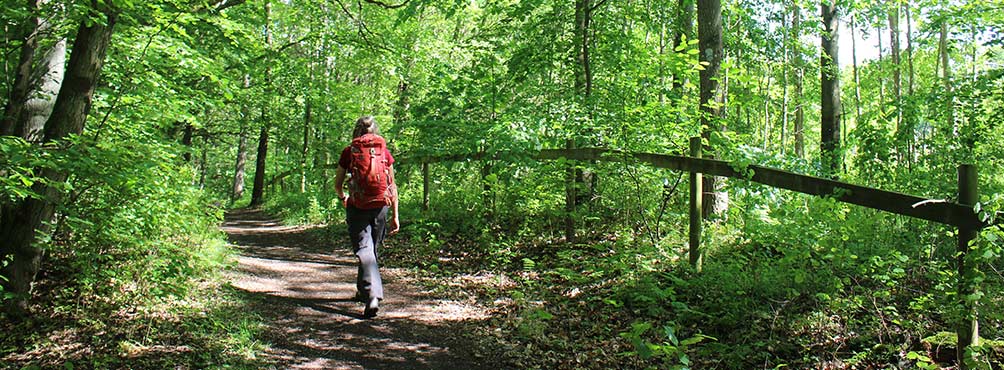
Read also: Hiking in Pelion: Unique routes for nature lovers
Nature and myth intertwined: How mythology shaped Pelion’s identity
Why did so many myths converge here?
The answer lies in the landscape itself.
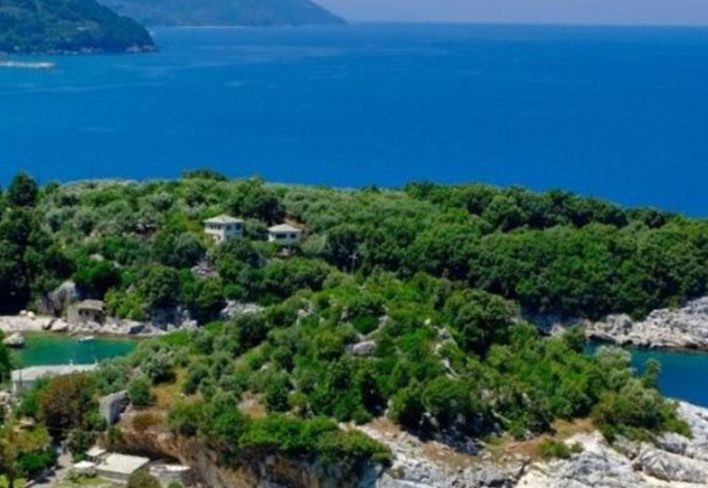
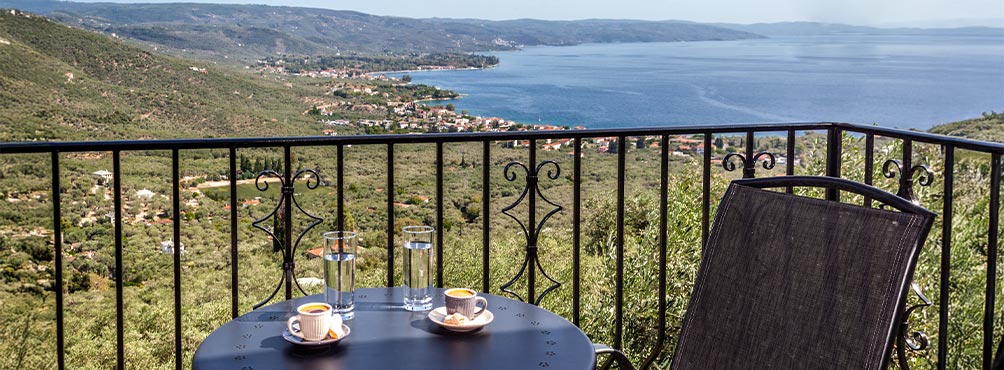
Pelion is covered in dense forests of chestnut, beech, and oak. Streams run through shaded ravines. The mountain looks toward the Aegean Sea on one side and the Pagasetic Gulf on the other. It is dramatic, yet gentle. Wild, yet nurturing.
In antiquity, the abundance of medicinal herbs reinforced the association with Chiron and healing. The mountain’s isolation made it a perfect mythical sanctuary. Its elevated position, close but not equal to Olympus, gave it symbolic tension — near the gods, but rooted in earth. Over centuries, these stories shaped Pelion’s cultural identity. They influenced local traditions, storytelling, and even architecture. The sense that Pelion is not merely scenic but sacred continues to define the region’s character.
Here, myth is not separate from landscape. It grows from it.
Learn more: Where to Stay in Pelion - Complete accommodation guide
Experience mythical Pelion today
So, what does all this mean for a modern traveler?
You may not encounter Centaurs in the forest, but you will feel something distinctive in Pelion. A quiet grandeur. A rhythm that blends sea and mountain. A landscape that invites reflection.
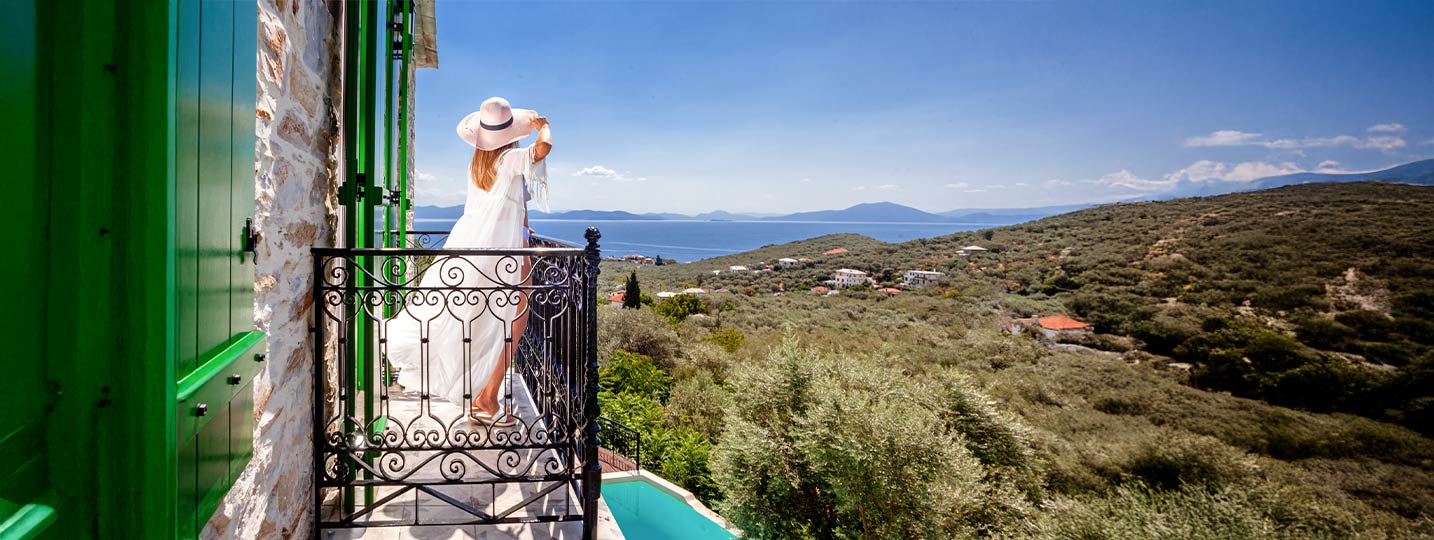
Walking along stone paths in traditional villages in Pelion, exploring hiking trails through dense forests, or discovering hidden routes by bike,you begin to understand the mountain in a deeper way. Gazing at the horizon where sky meets water, or sitting beneath ancient trees, it becomes easy to understand why the ancients imagined gods celebrating here.
Today, Pelion offers a different kind of sanctuary. A place to reconnect. To slow down. To experience authenticity without sacrificing comfort. If you want to experience this atmosphere in its essence, the activities you choose and your accommodation in lodgings that respect the traditional architecture of Pelion make all the difference.
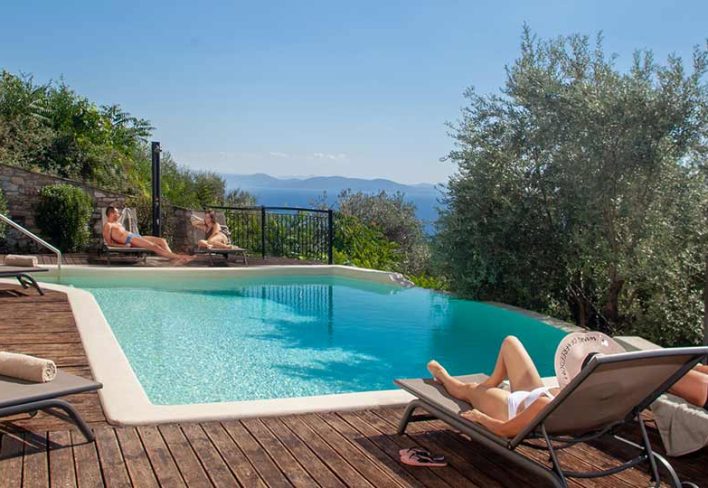
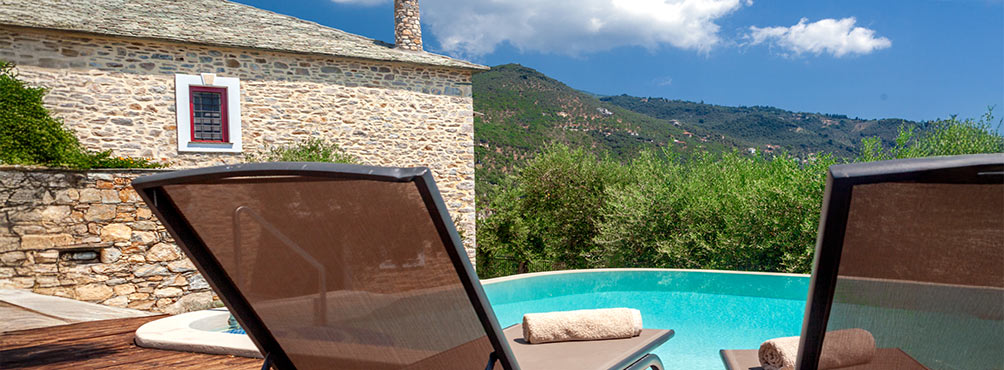
Pelion Esties offers beautifully designed villas that respect local heritage while providing modern comfort. Ideal for families seeking space and privacy, or couples looking for a romantic escape, these homes blend stone, wood, and panoramic views into an experience that feels timeless.
Families can enjoy relaxed mornings with a thoughtfully prepared breakfast basket filled with local flavors, while couples can unwind in the privacy of a villa with a hot tub, surrounded by mountain views. It’s a way to experience Pelion slowly, with comfort, intimacy, and a sense of connection to the landscape.
In Pelion, mythology is not just something you read about.
It is something you sense.
And sometimes, that is even more powerful.